Horos: AI crypto portfolio platform
Wisdomise had powerful AI but no product around it. As the only designer, I had 8 weeks to build the MVP that became central to closing their $650K pre-seed round.
Industry
Fintech, Crypto, AI
Timeline
~8 weeks
Role
Senior Product Designer (sole)
Year
2022-2023
Challenge
The company had built an AI-driven market prediction engine. The engine performed well. But the product around it was a mess: no design system, every screen built as a one-off, no mobile version, and a dashboard that lacked the metrics traders actually needed. There was no landing page to explain what the product even did.
The company was running out of runway and needed an investor-ready product fast. That meant building 60+ screens in 8 weeks with zero existing design foundation.
My role
As the sole Senior Product Designer, I owned research, IA, design system, desktop and mobile UI, the landing page, and interaction design. I worked with the founder, PM, a brand designer (illustrations and visual identity), and the engineering lead (I stayed through handoff to catch edge cases). Business strategy came from the founder. Product decisions were mine.
Results
$650K
Pre-seed raised. The MVP dashboard and landing page were demoed to investors as part of the pitch.
$9.5M
Seed round followed the product pivot. My user research surfaced the insight that shifted the company's strategy.
60+
Screens shipped in ~8 weeks across dashboard, onboarding, mobile, and design system.
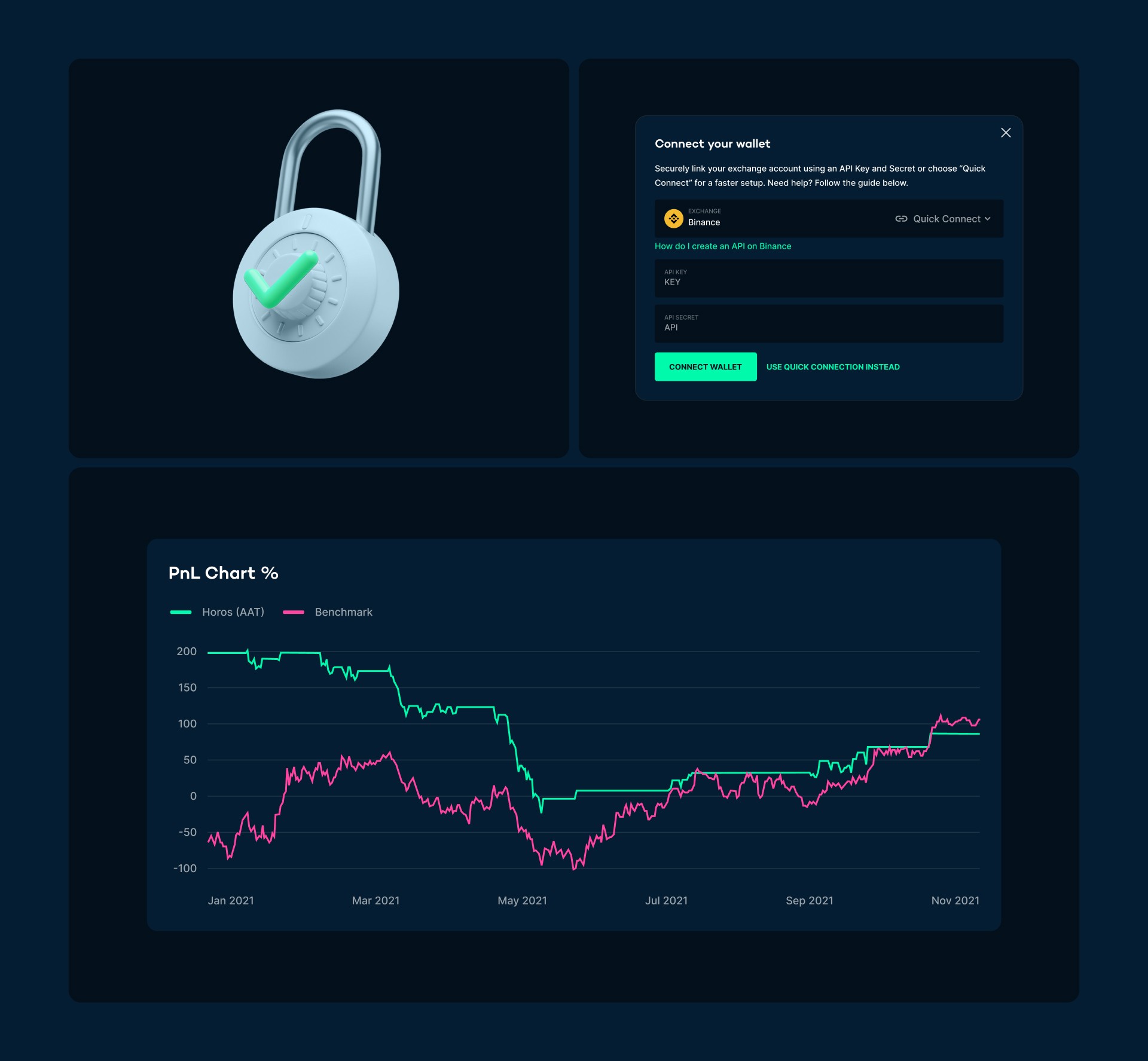
Onboarding and wallet connection flow: KYC verification, exchange linking via API or Quick Connect, and portfolio performance tracking from day one.
Audit & research
I audited the existing platform with the previous designer. Within an hour, it was clear the system was brittle: no components, no spacing rules, every screen a one-off. I pitched a research plan with time estimates: competitor analysis first, then interviews and personas. This became the roadmap.
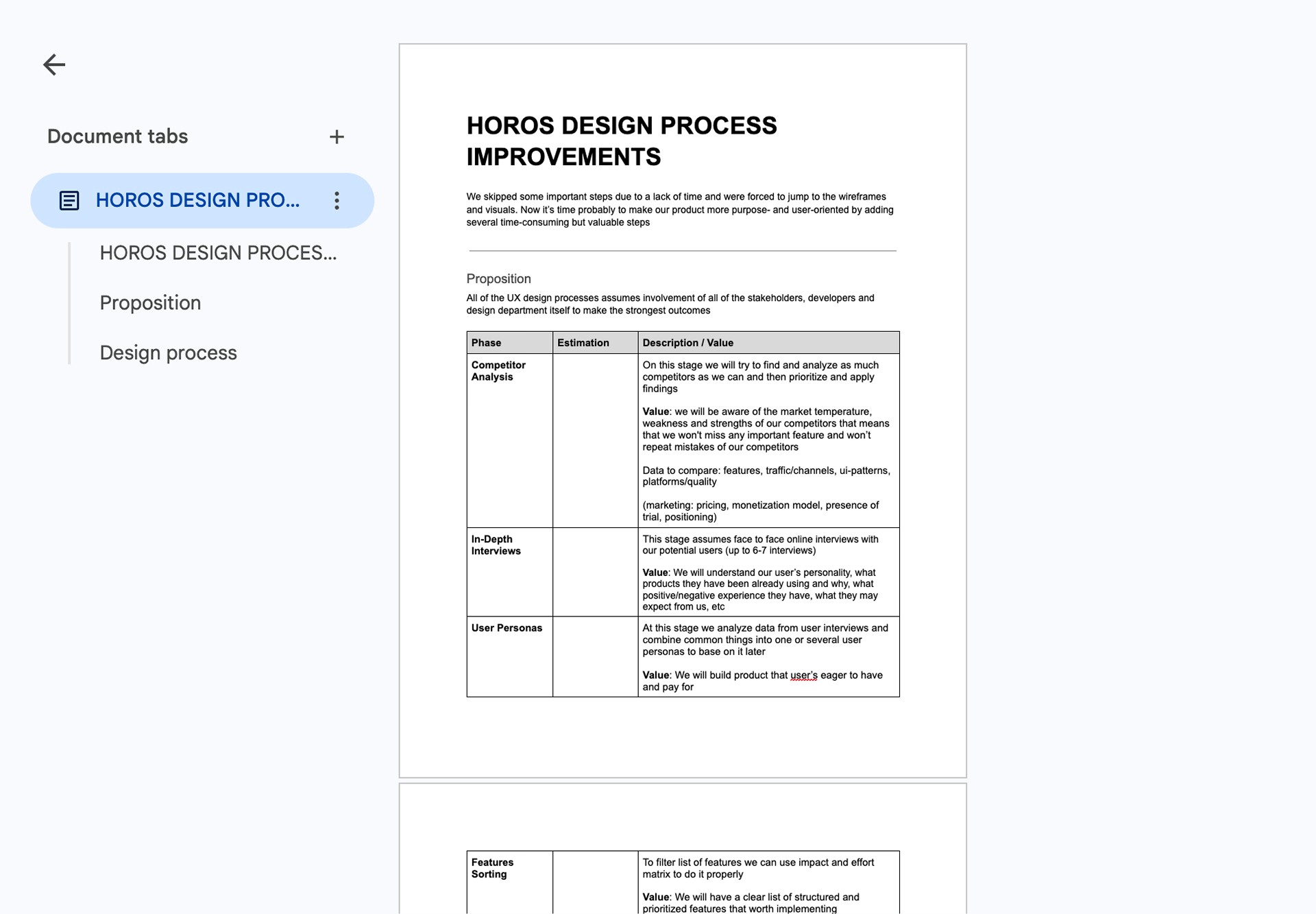
Design improvement proposal: phased research and redesign plan with time estimates.
I analyzed 10+ competing platforms. The gap was clear: platforms like TradingView buried signals in complex menus, while simpler tools lacked depth. Nobody offered AI-powered signals in an interface that worked for both beginners and power users. That was our opening.
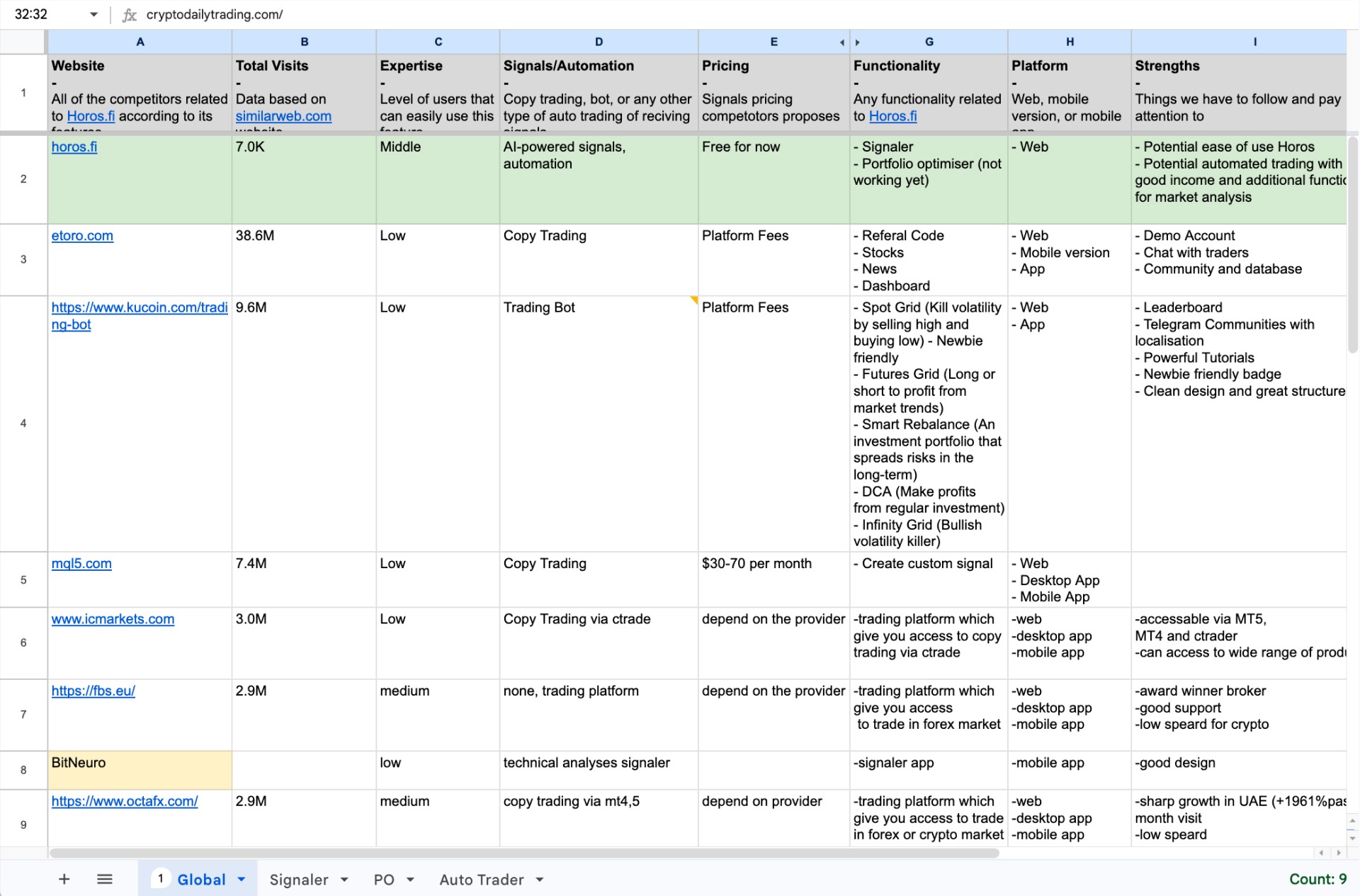
Competitor analysis: features, pricing, traffic, and market positioning across 20+ platforms.
User interviews that shifted the product
The team wanted to skip research and ship fast. I argued we could run lean interviews in parallel without slowing anything down. I wrote the guide, the PM handled scheduling, and I stayed on deliverables. We talked to crypto holders and potential users across risk profiles: their current tools, frustrations with signal providers, willingness to pay, and what would make them switch.
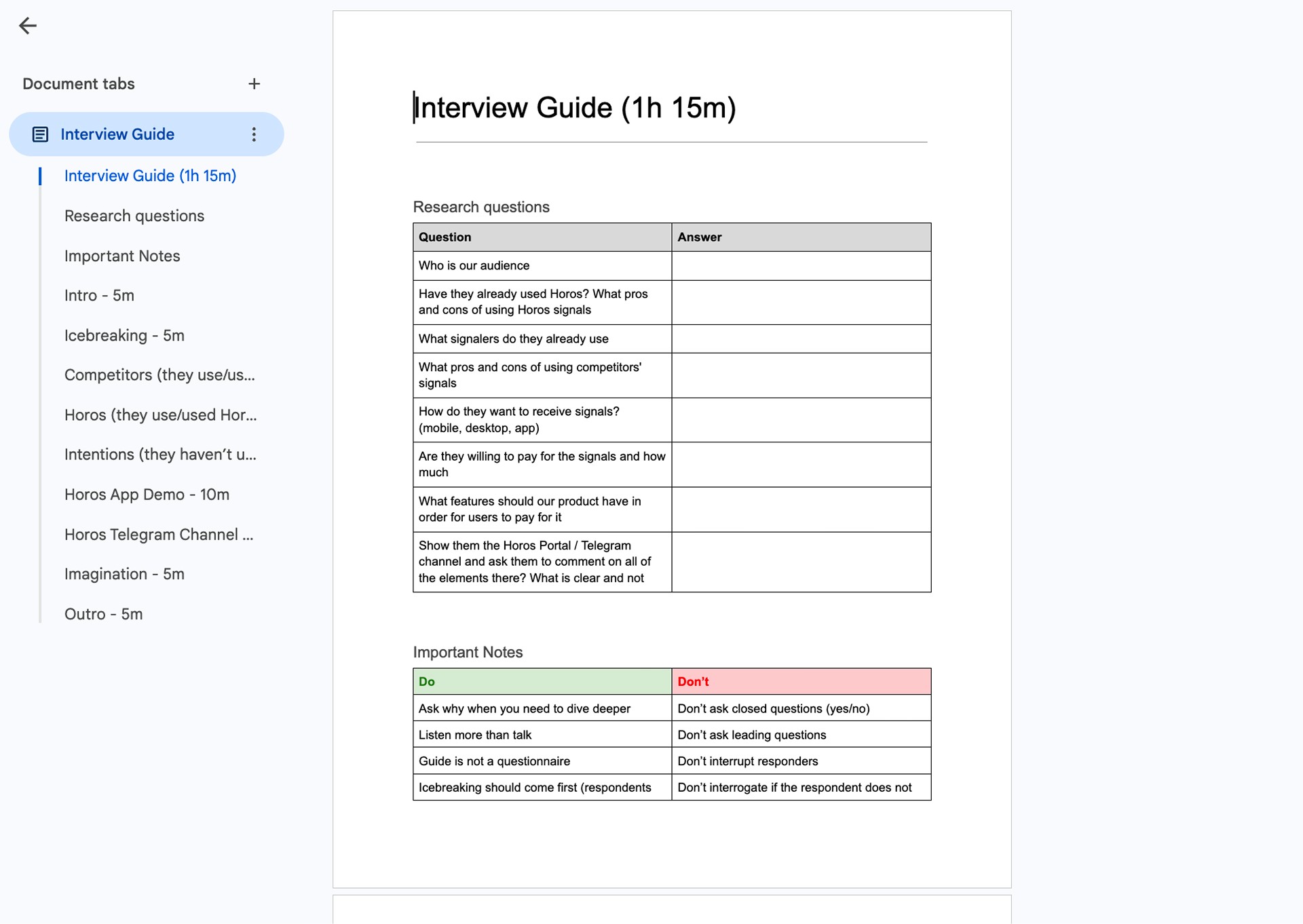
Interview guide: research questions covering audience, competitors, product perception, and willingness to pay.
The team's initial roadmap had prioritized portfolio optimization, but the interviews revealed traders actually wanted signals first: real-time, actionable calls they could trust. The company repositioned around this insight. That pivot became the foundation of their fundraising story and eventually led to the $9.5M seed.
Interviews were a starting point, but I needed ongoing feedback. I designed an in-app questionnaire (1-to-5 satisfaction rating plus open text) and pushed for a Telegram community for early users. Three layers of insight: formal research, in-app data, and live conversations.
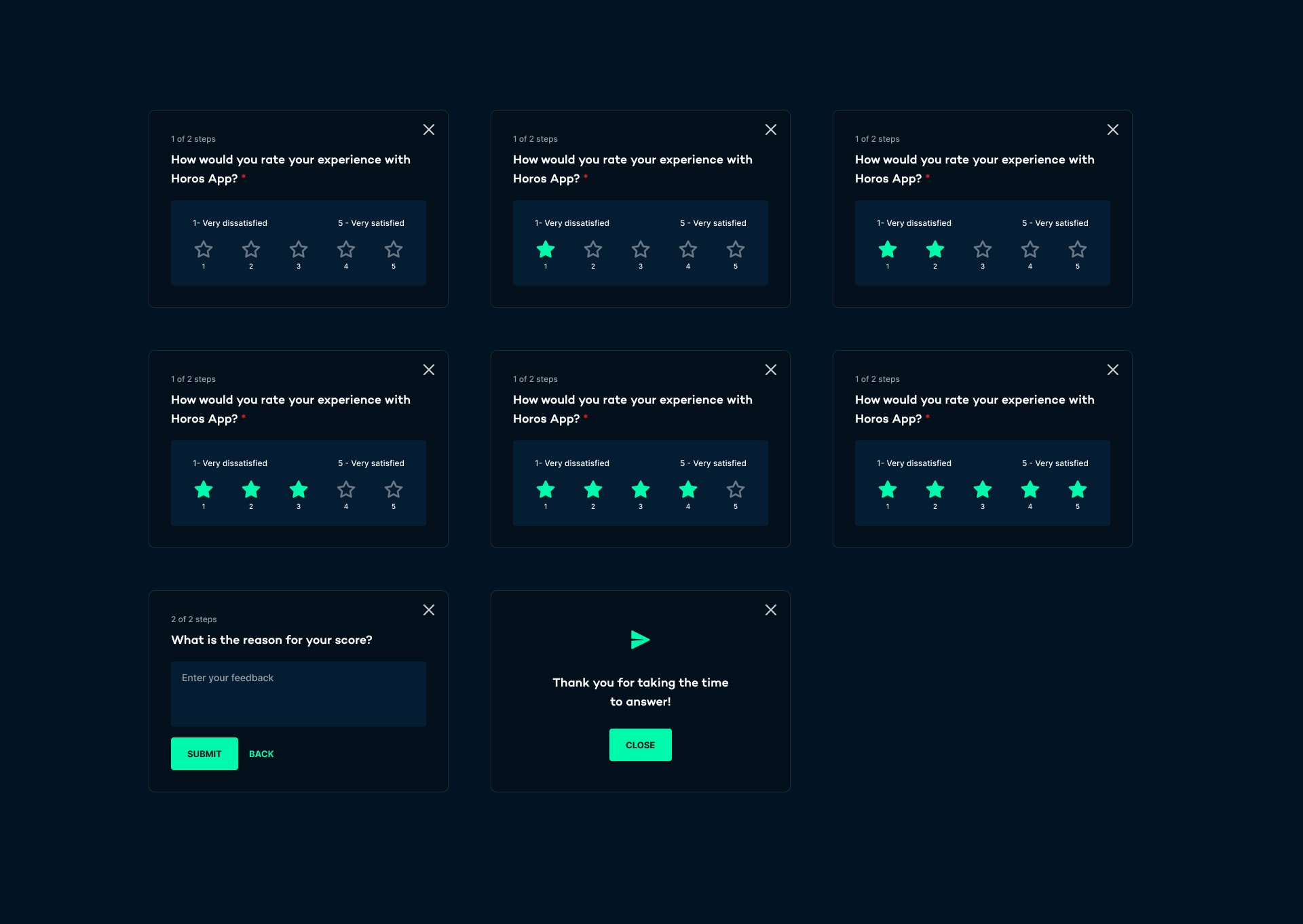
In-app questionnaire: 1-to-5 rating with follow-up feedback, all interaction states.
Before & after
The old platform on the left is what I inherited. The new dashboard on the right is what I shipped.
1
Design system from day one. Reusable components, color tokens, spacing grid. Every new screen could be built from existing parts, which cut development time and kept the product consistent.
2
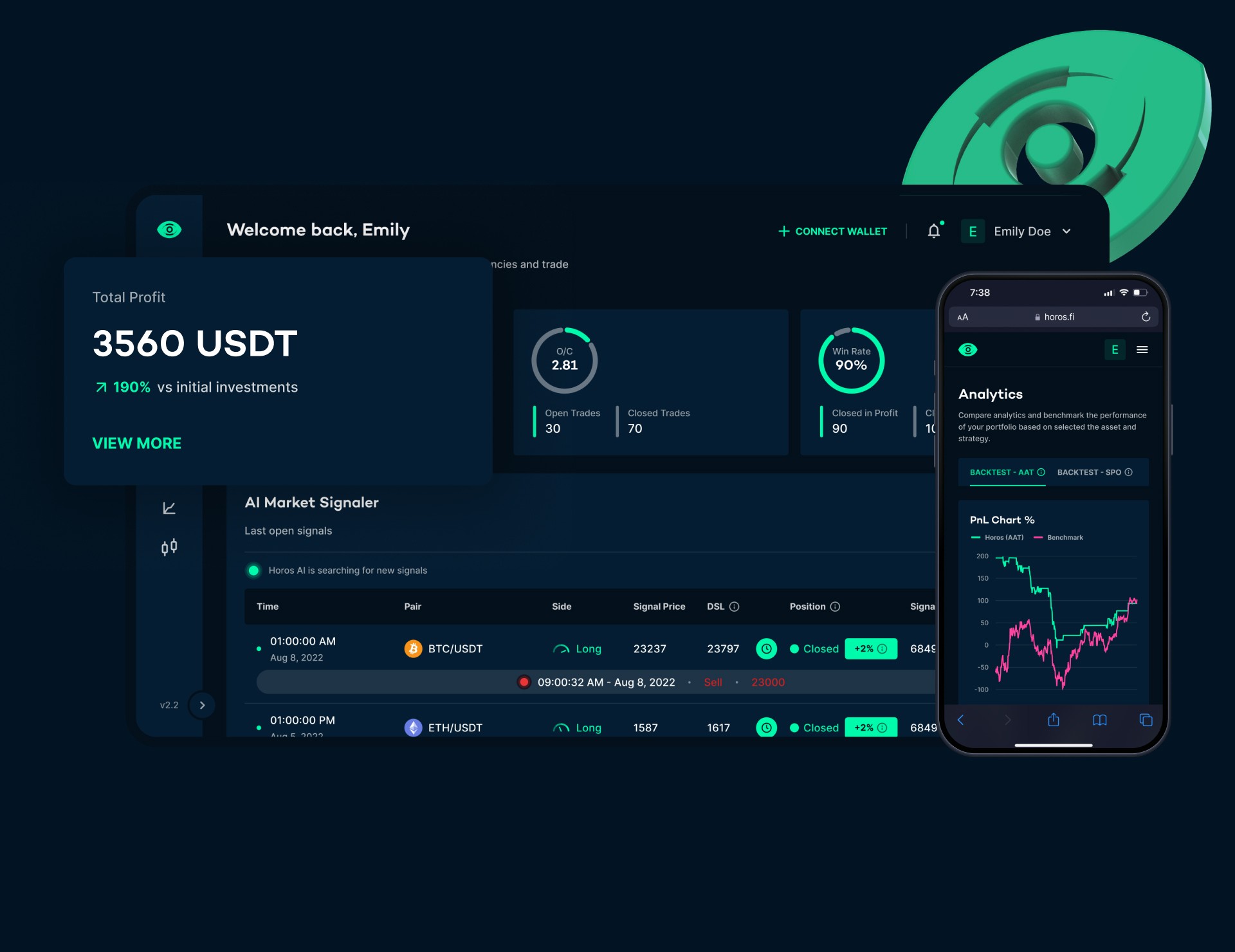
Dashboard built around trader needs. Total profit, win rate, O/C ratio, and live AI signals visible on first glance. No navigating away to find the numbers that matter.
3
Scalable layout with mobile support. Vertical sidebar nav that accommodated new modules without restructuring. Full mobile version designed from the same component system.
Before
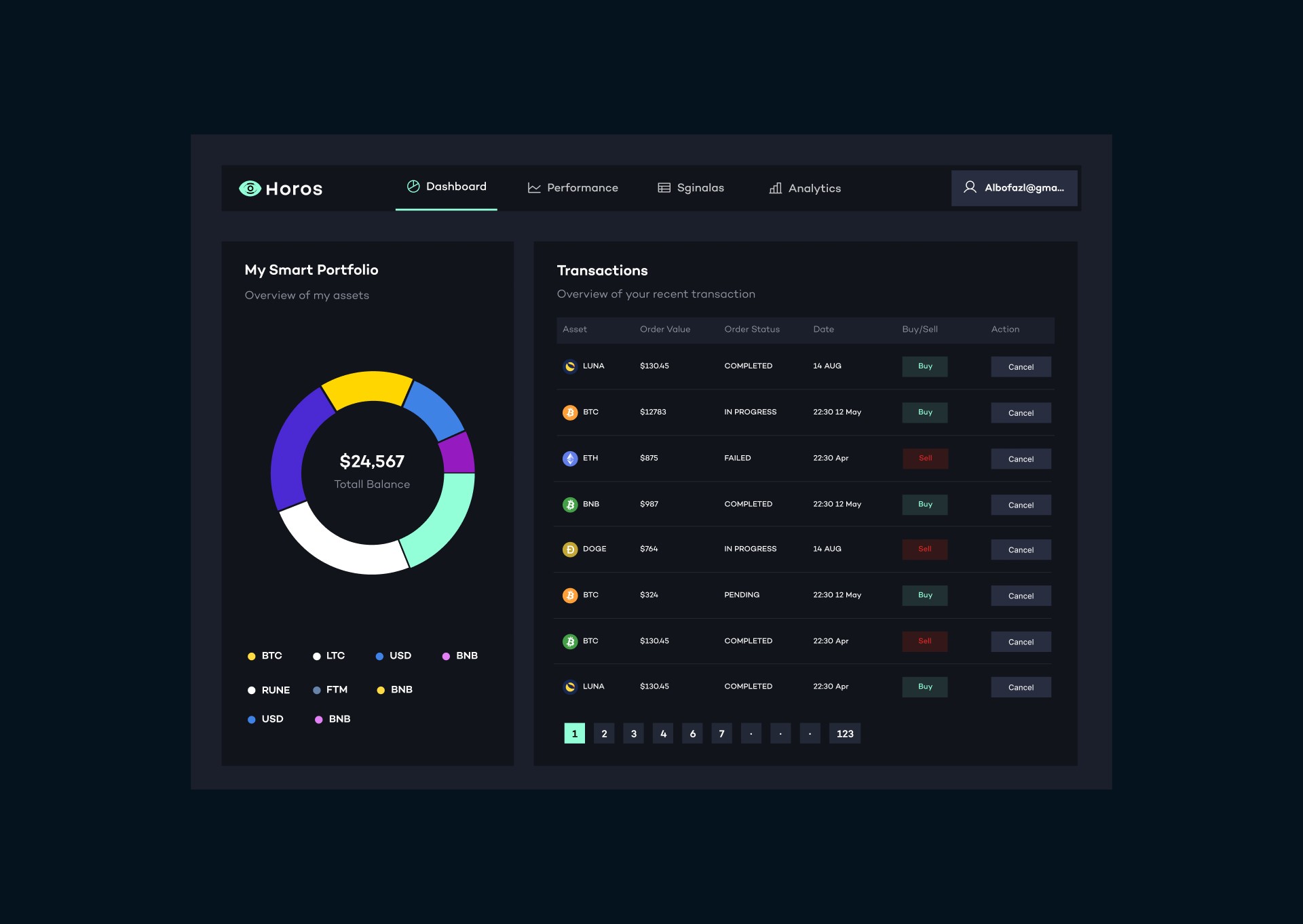
After
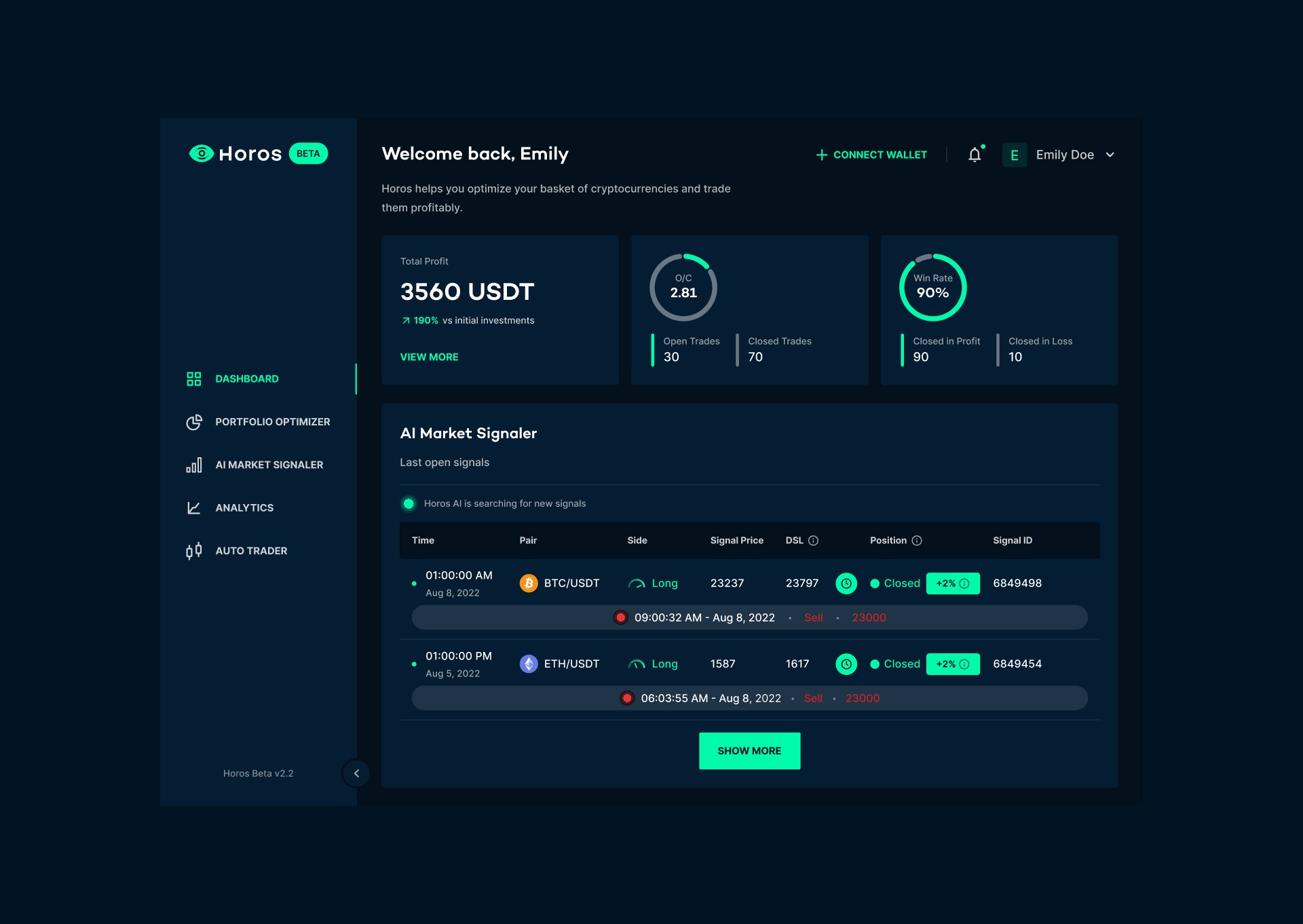
Designing the platform
I mapped the full IA in about a week: sign-up, onboarding, wallet connection, dashboard, every trading module, and all modal interactions for desktop and mobile. We tested the structure with the team, refined it, then moved to wireframes.
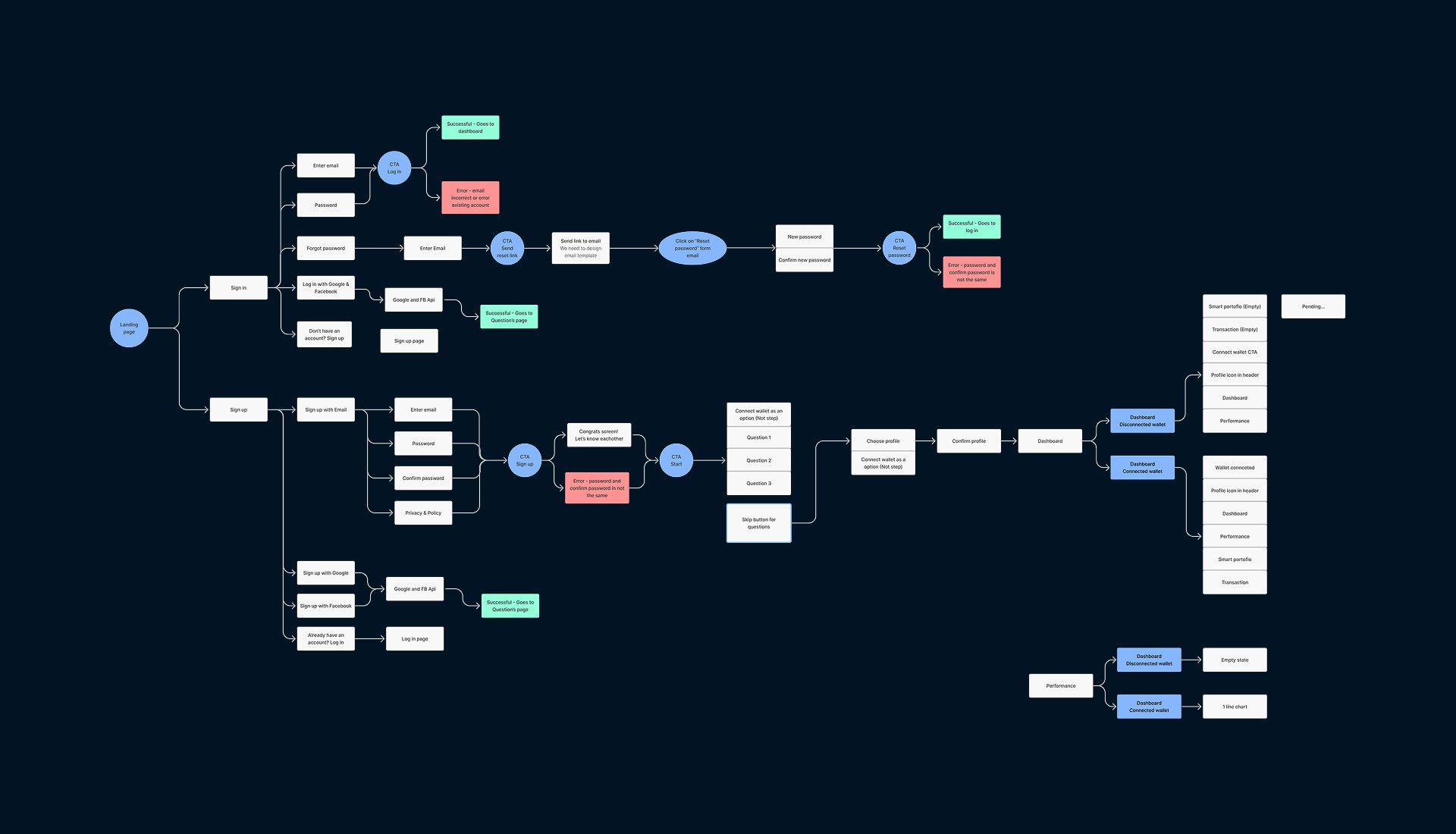
Platform flow: sign-up, onboarding, dashboard, trading modules, and modal interactions.
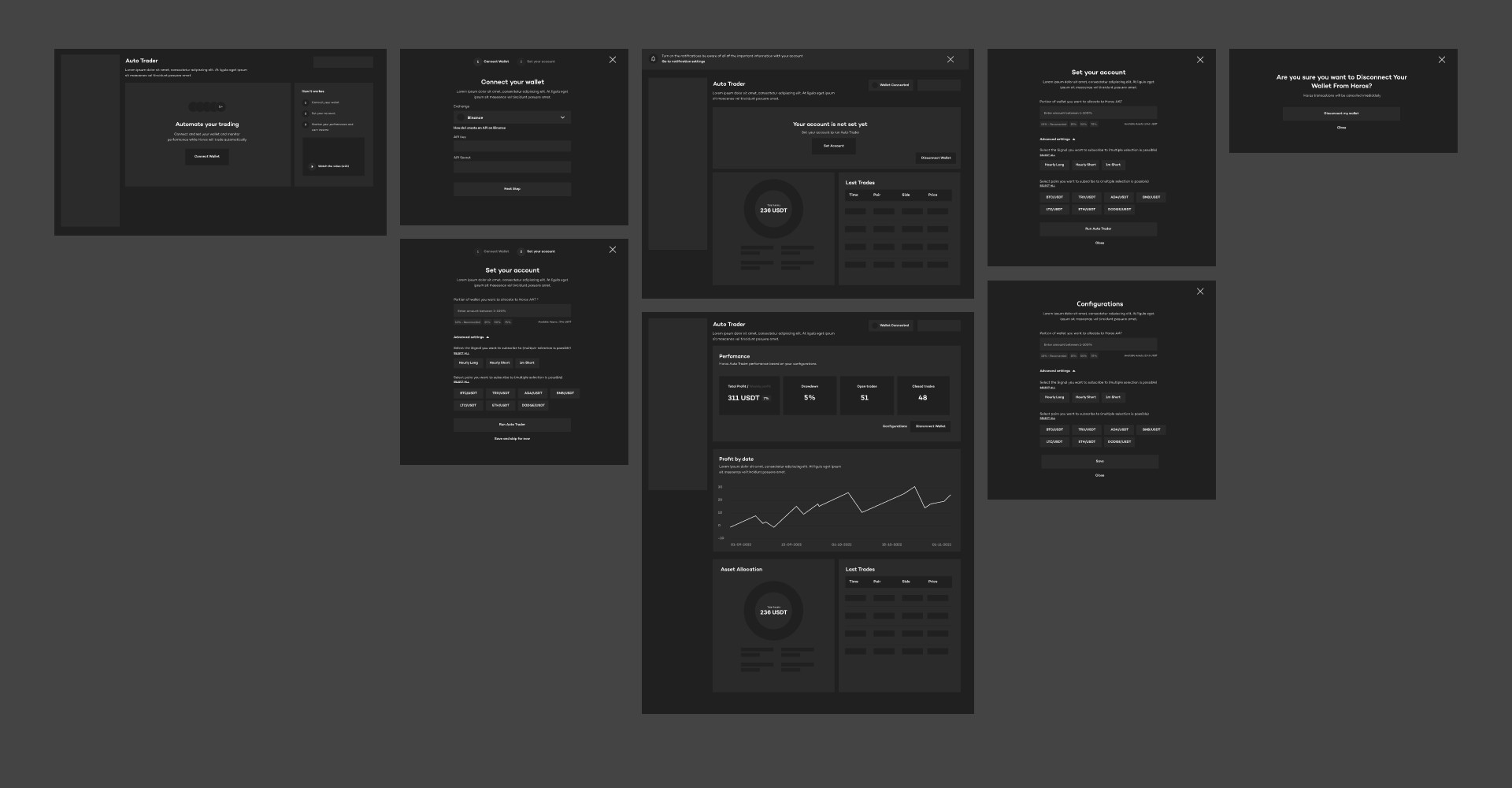
Auto-trader wireframes, refined after user interview insights.
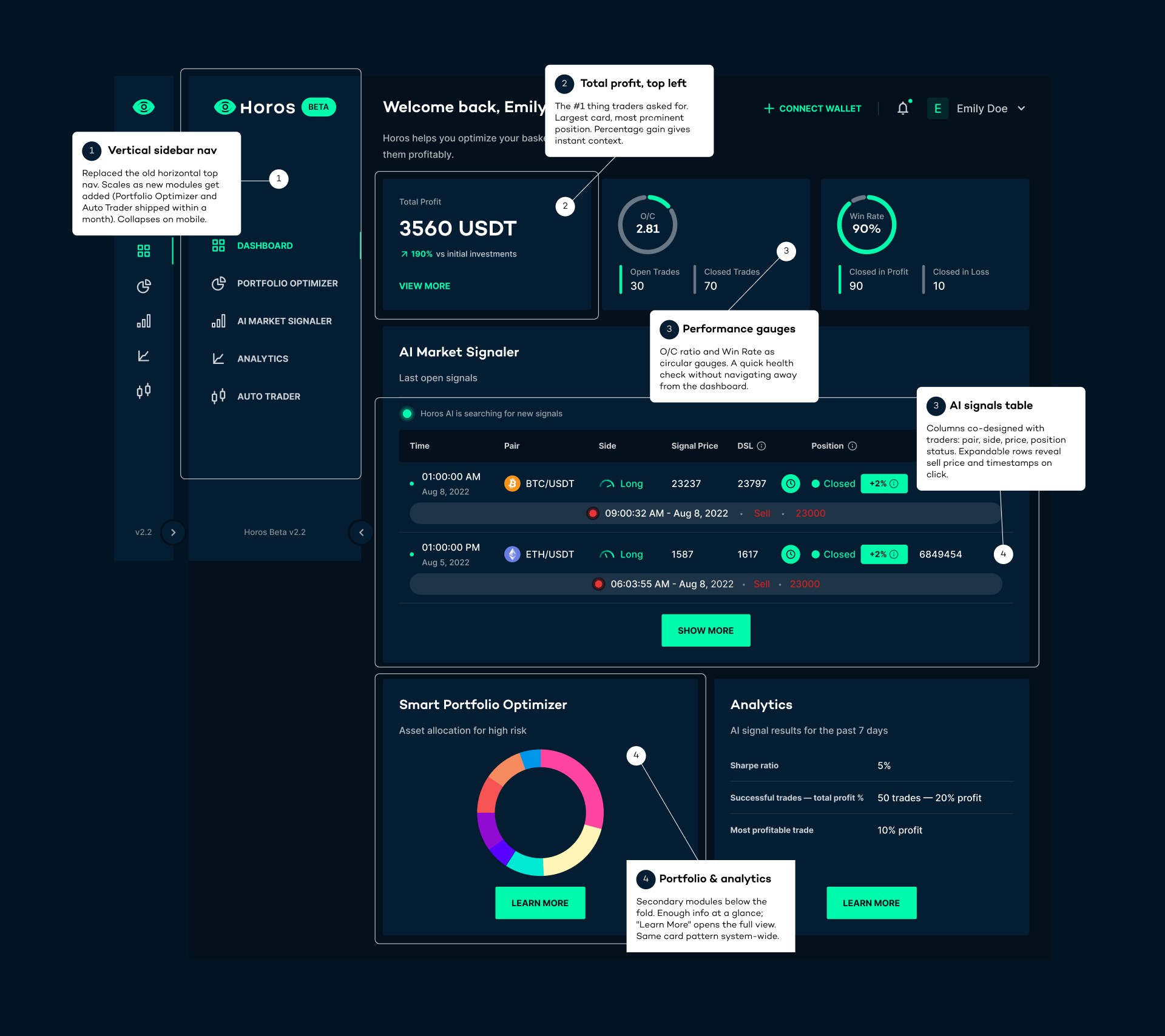
New dashboard: information hierarchy designed around what traders need to see first.
Product design screens
All screens were built on a single linked design system and organised as self-contained prototype flows in Figma, 500+ pages across the platform, each section navigable end to end.
Design decision
What a trader sees first
Total profit at top left, O/C ratio and win rate beside it for a quick performance check. Below, the AI Market Signaler shows live signals with pair, side, price, and position status. Portfolio allocation and analytics complete the picture. Each module shows just enough at a glance; click through to full tables when you need more.
Collaboration
Designing the signals table with traders
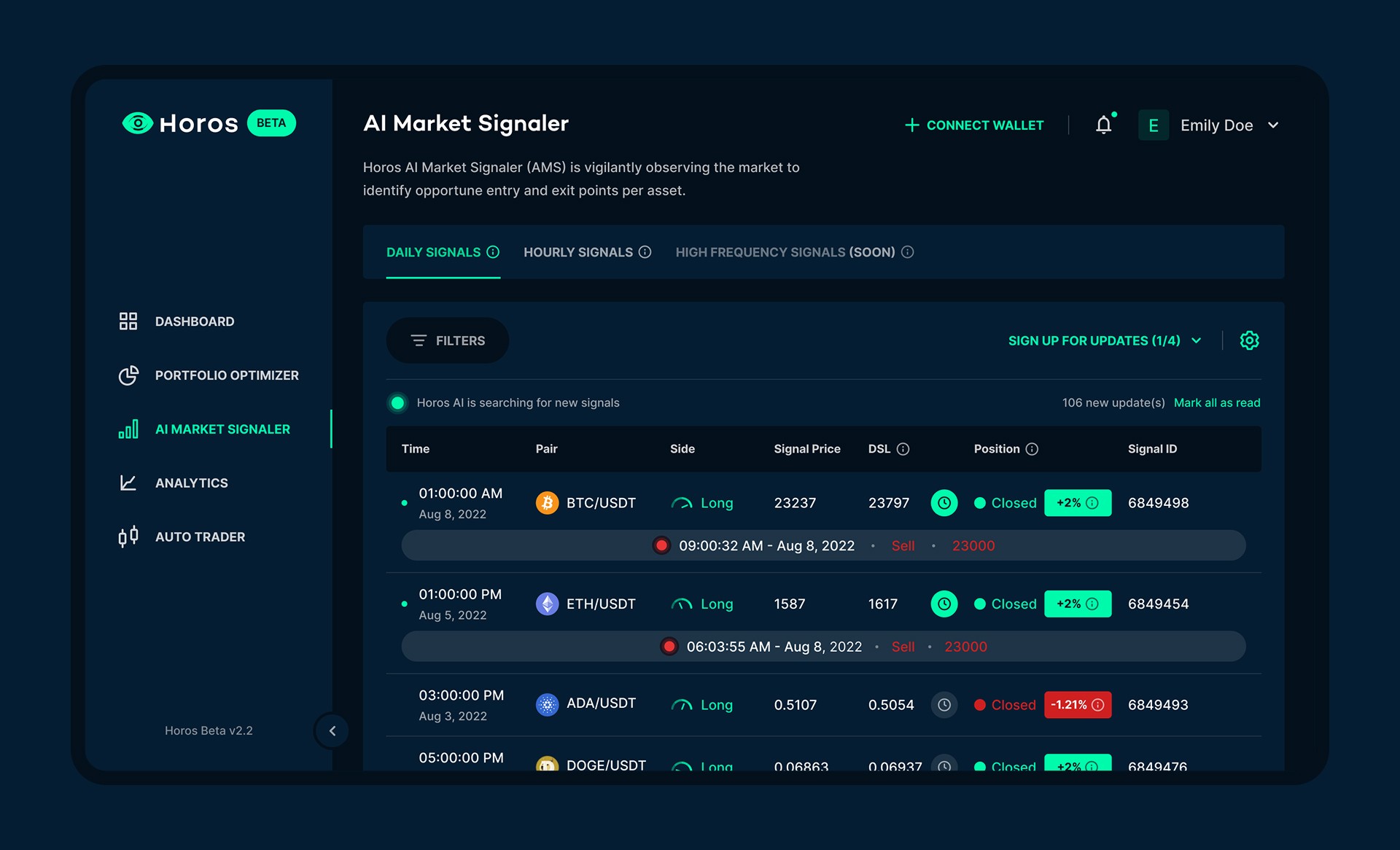
Traders told me what columns mattered: pair, side, price, position status. I used an expandable row pattern: clean by default, full detail (sell price, timestamps) on expand. Readable for beginners, deep enough for power users.
Design decision
Vertical sidebar for scalable navigation
The old platform had a horizontal top nav with four items. I replaced it with a vertical sidebar because we knew Portfolio Optimizer and Auto Trader were coming within a month. The sidebar scales without restructuring and collapses on smaller screens for mobile.
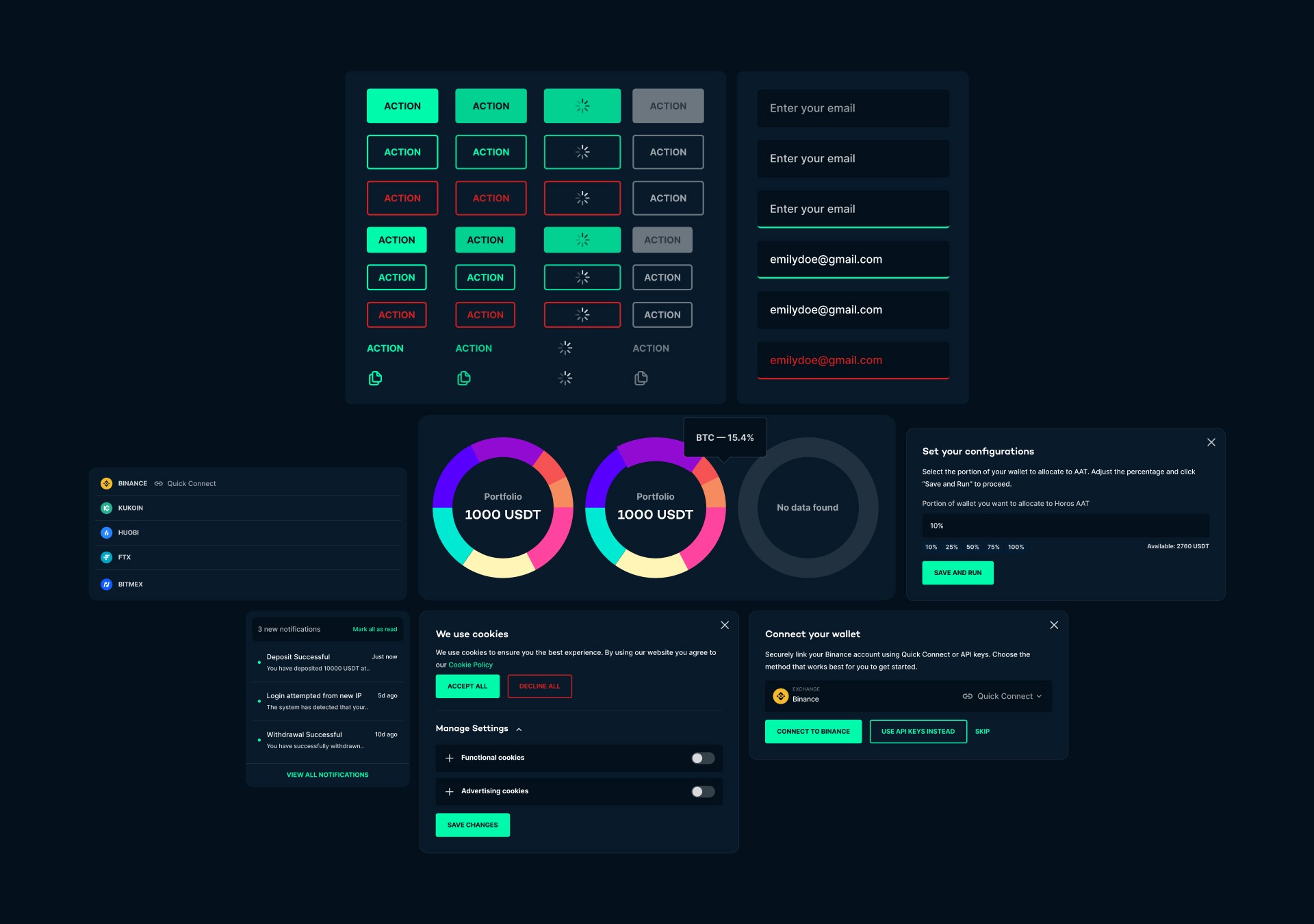
UI kit: components, color tokens, typography, spacing, and interactive states.
Trading modules up close
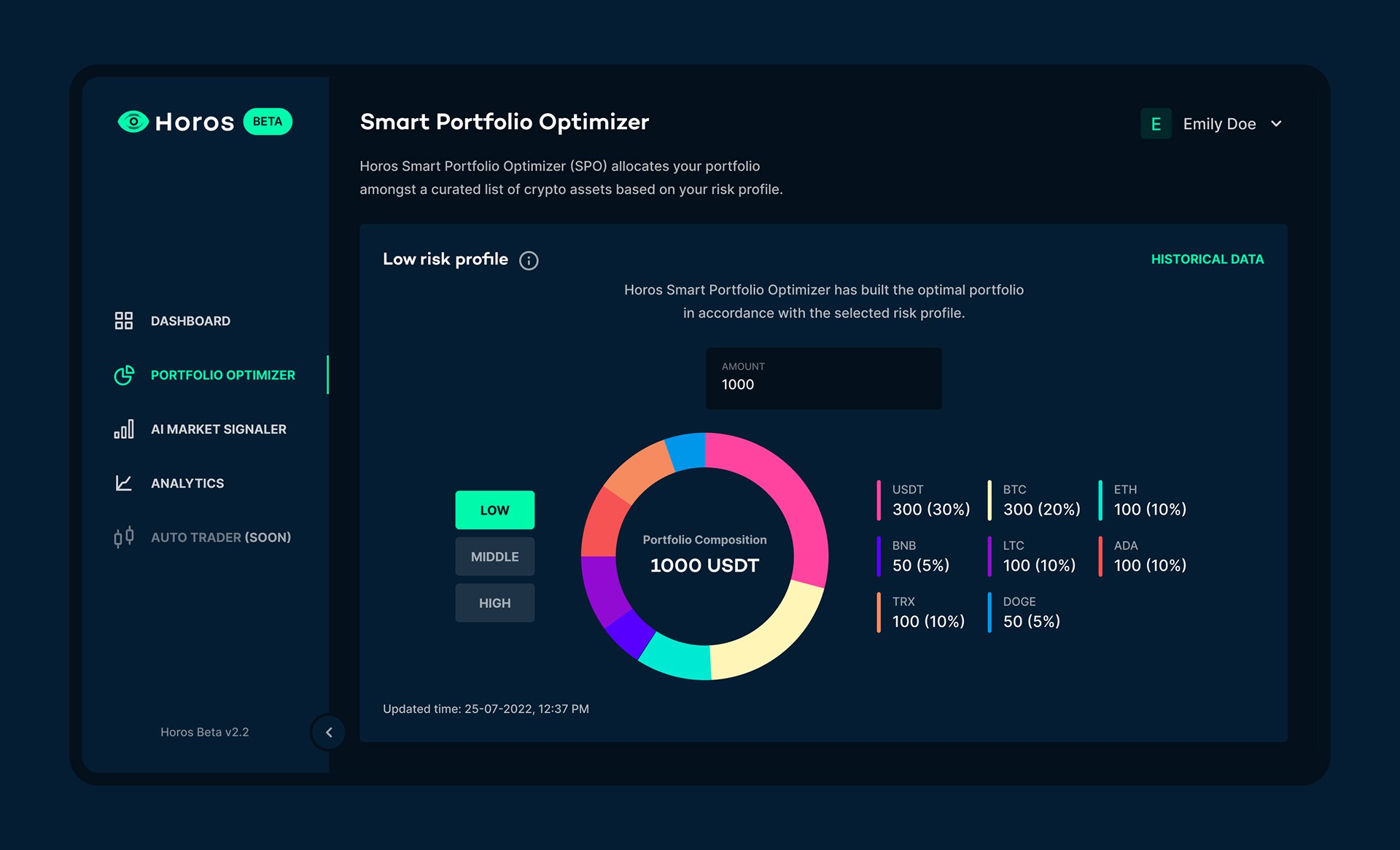
Each module followed the same logic: show essential data first, let power users expand for detail. The design system meant every new screen inherited spacing, typography, and component patterns automatically.
AI Market Signaler: live trading signals with pair, side, price, and position status.
Auto Trader: automated position management with customizable strategy parameters.
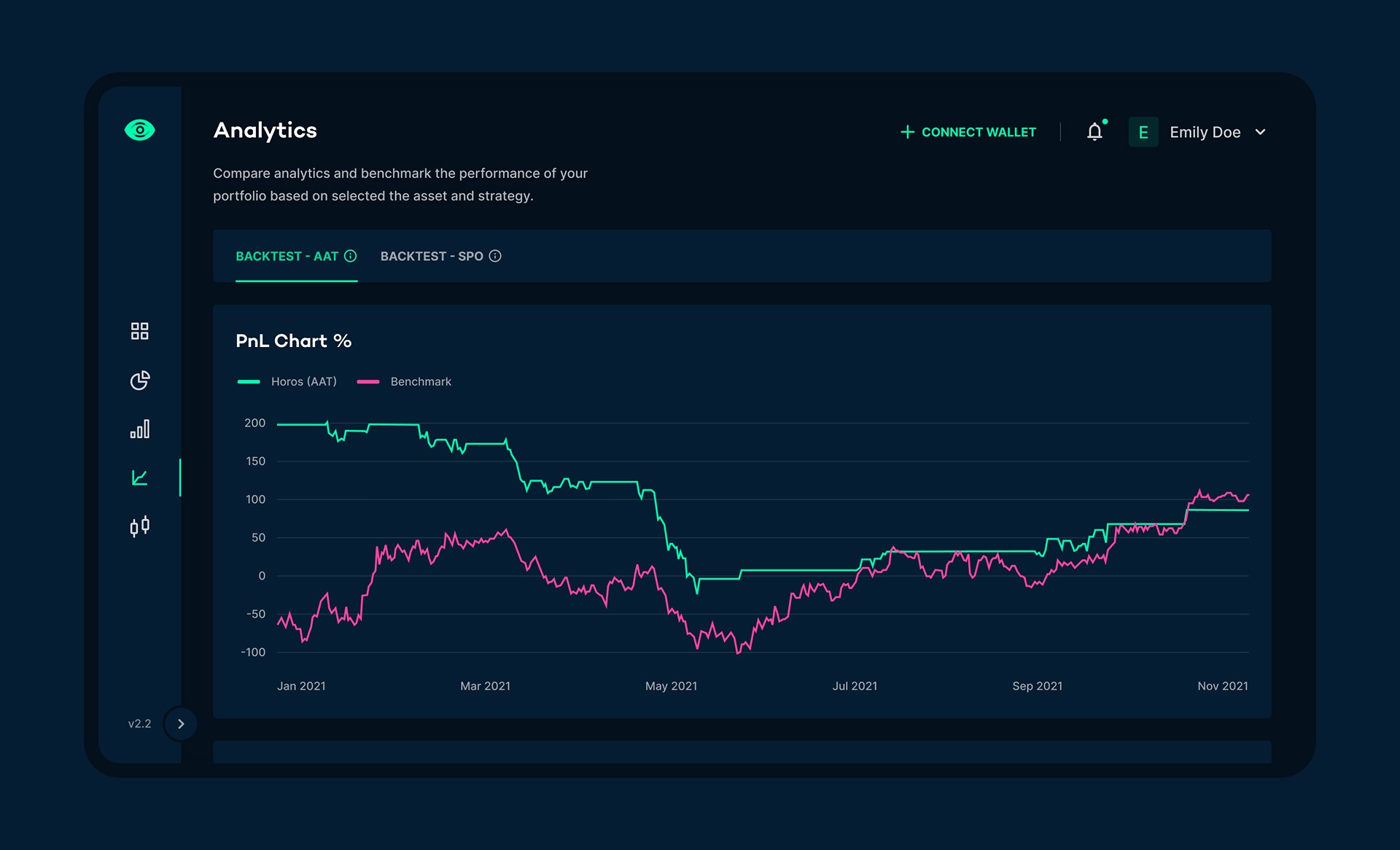
Analytics: portfolio performance benchmarking with PnL tracking and backtest comparisons.
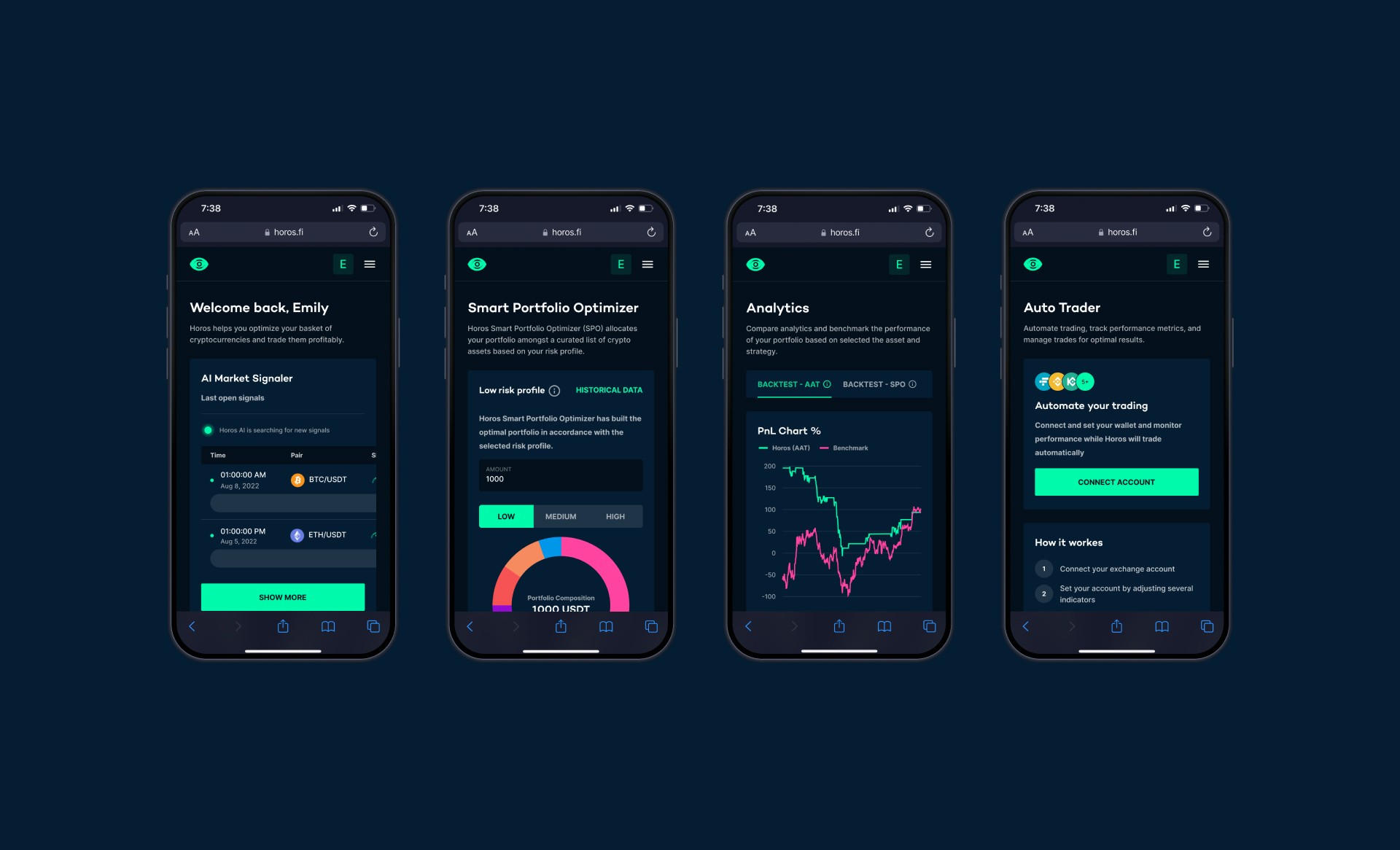
Mobile version: dashboard, signals, portfolio, and key flows optimized for on-the-go trading.
Landing page
Two audiences: users who needed to understand the product, and investors who needed to see something investable. I led with the product interface (showing, not telling), followed by partner logos, feature breakdowns, and a clear sign-up CTA. Built from the same component system as the platform so it evolves without separate maintenance.
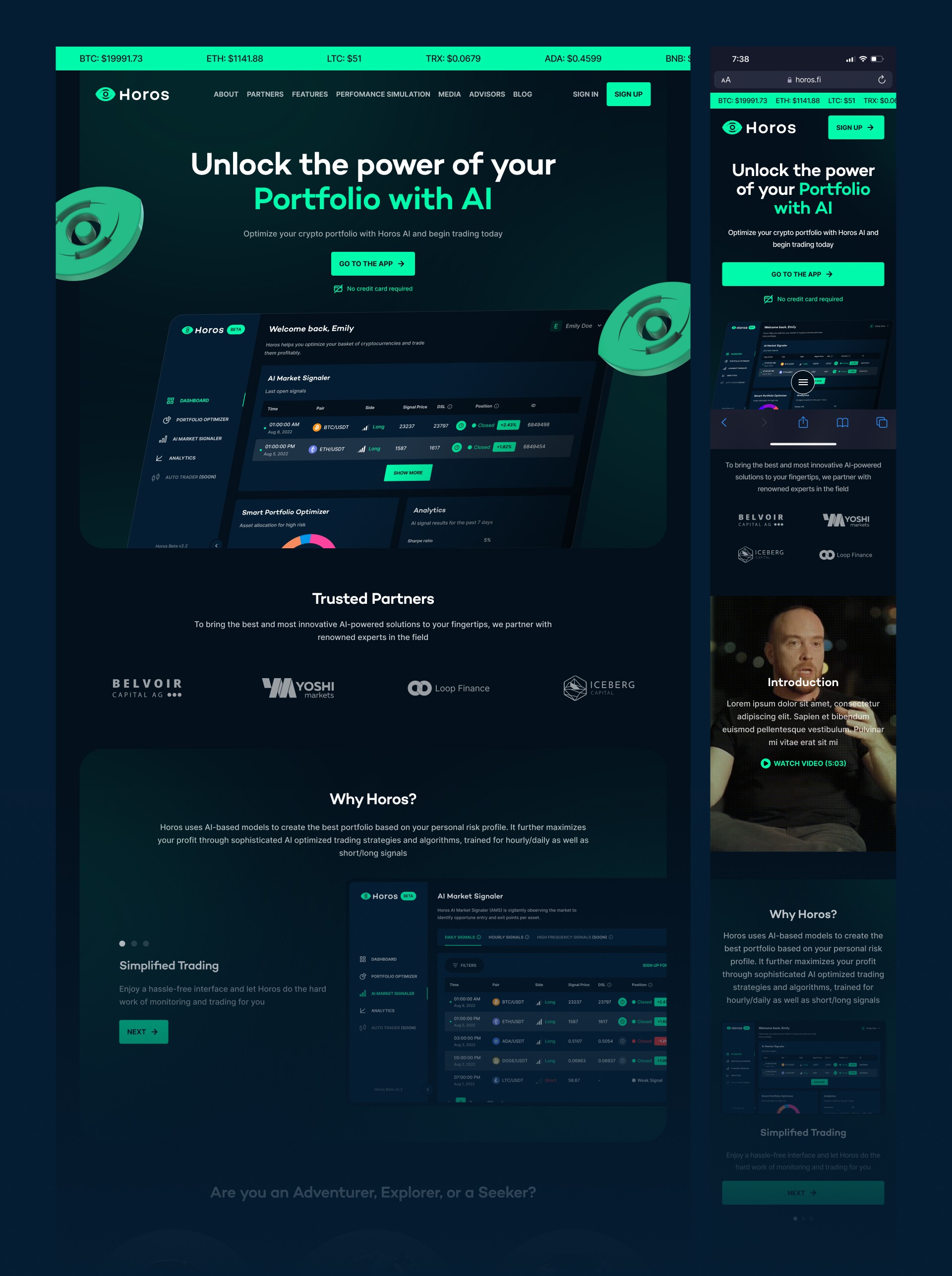
Horos landing page: responsive marketing site built from the platform's design system.
Summary
The MVP shipped on time and became the centerpiece of the investor pitch. More importantly, the user research I ran shifted the entire product direction: from portfolio optimization to AI-powered trading signals. That pivot reshaped the company's fundraising story and eventually led to a rebrand from Horos to Wisdomise as the product expanded beyond crypto.
The design system, component library, and product processes I built survived the pivot intact. New modules slotted into the existing framework without rework, and the team continued shipping at the same pace after I rolled off.
Research pays for itself
The team wanted to skip interviews. Running them in parallel cost zero time and produced the insight that reshaped the company's fundraising story.
Systems over screens
Investing in a design system on day one felt slow. It's the reason we shipped 60+ screens in 8 weeks without the product falling apart.